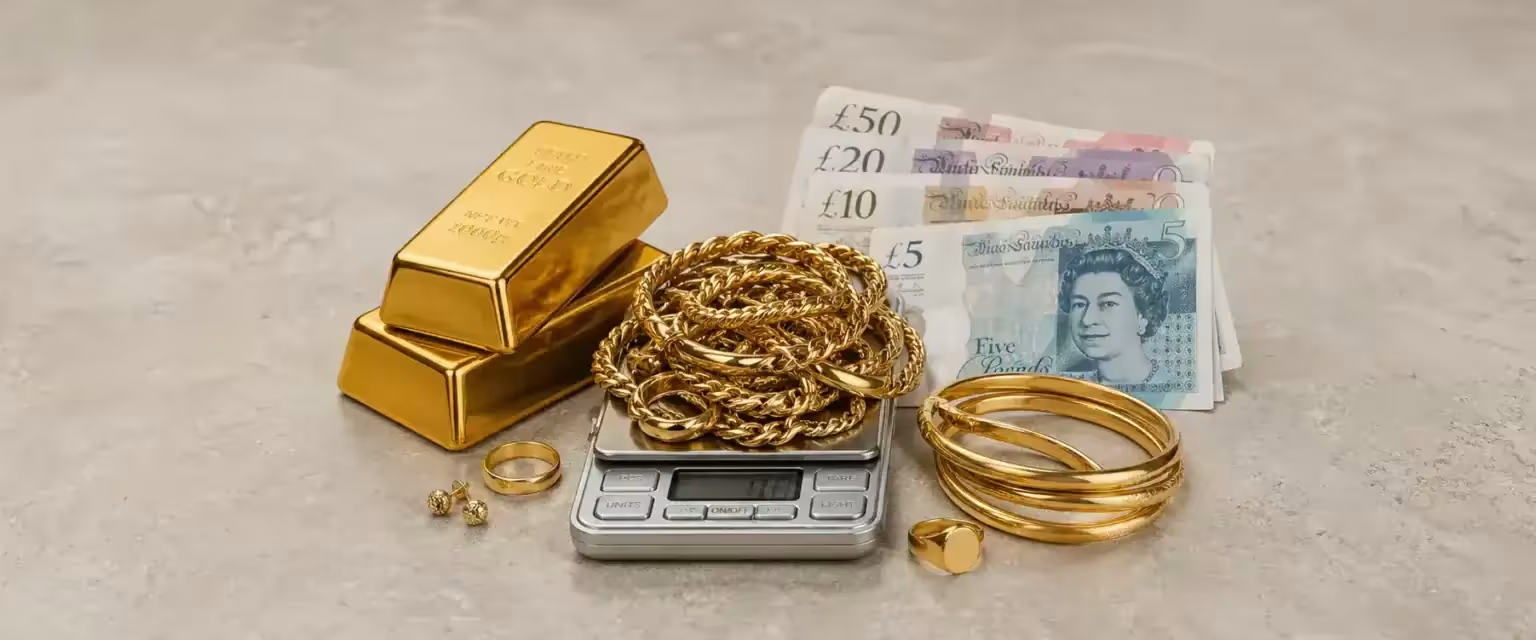


22ct Gold Price Estimate Calculator
Our 22ct Gold Price Calculator updates every few minutes, ensuring you receive an accurate valuation at the time of sale. It factors in all processing costs, providing a precise payout amount. Linked to the Live UK Gold Price (GBP), our calculator gives you a reliable estimate based on real-time market rates.
Estimate your gold value
Enter the weight and carat to see an indicative value in pounds sterling.
Live 22ct Gold Prices
Our live 22ct gold price calculator provides an indicative estimate based on the weight you enter and the current price per gram. Enter your gold’s weight in grams to see its estimated value. Your final offer may differ after we assess the item’s weight and purity.
| Carat | Purity | Price per gram |
|---|---|---|
| 9ct | 37.5% | £38.28 |
| 14ct | 58.3% | £59.54 |
| 18ct | 75.0% | £76.56 |
| 22ct | 91.7% | £93.57 |
| 24ct | 100.0% | £102.07 |
*The estimated valuation is based on the current spot market price, and depending on the total weight and quality of the gold.
Sell your gold online quickly or check the latest gold prices with ease—download the Sell My Gold app on Apple or Sell My Gold app on Android device today!
Check the 22ct gold price before selling
The current 22ct gold price helps you estimate what your jewellery or other gold items could be worth. Before you decide to sell, use our Gold Price Calculator to explore an estimate based on weight, purity and market conditions.
You may have a broken chain, an unwanted ring or jewellery you no longer wear. Whatever your reason for selling, understanding the calculation helps you assess an offer. However, an online estimate is a starting point: the buyer still needs to confirm the weight and purity of your items.
What does 22ct gold mean?
The carat number describes the proportion of gold in an alloy. In the UK, the 916 fineness standard corresponds to 22ct gold, meaning 916 parts of gold per thousand. The remaining metal forms the rest of the alloy. You can check recognised standards through the Birmingham Assay Office’s gold hallmarking guide.
First, look for marks inside a ring, near a clasp or on the back of a pendant. A 916 mark can help you identify the likely purity. However, if you cannot read the marks or do not know what they mean, ask for a professional assessment rather than guessing.
Also, separate pieces with different purity marks before estimating their value. For example, keep 9ct and 18ct items apart from your 22ct jewellery. Each group needs its own calculation because the gold content differs.
How to use our 22ct gold price calculator
Start by gathering the items you want to value. Then, enter their estimated weight in grams and select the appropriate purity in the calculator. Our tool uses those details and market pricing to produce an estimate.
- Check the purity: look for a readable hallmark or use information from a previous professional assessment.
- Weigh your items: use grams and keep different carats separate.
- Enter the details: choose 22ct for the relevant items and check your weight entry.
- Review the estimate: use the result to prepare for a buyer’s assessment.
For a useful comparison, note the date and the details you entered. If you check again later, use the same weight and purity. That way, you can distinguish a change in the quoted rate from a change in your inputs.
Calculating the value of 22ct gold per gram
To make a simple estimate, multiply your gold alloy’s weight by the quoted 22ct gold price per gram. Make sure the rate specifically applies to 22ct material before you start.
Estimated value = weight in grams × quoted 22ct rate per gram
For example, suppose a buyer quotes £70 per gram for 22ct gold and your eligible gold weight is 10 grams. The calculation gives an estimate of £700. This is an illustrative example, not today’s price or a guaranteed offer.
A rate specifically for 22ct gold already accounts for its purity. Therefore, do not apply another purity adjustment to the result. Also, avoid using a pure-gold rate as though it were a buyer’s quoted rate for your jewellery.
Why weight matters when checking your estimate
An accurate weight makes your estimate more useful. However, the total weight of a piece may include stones, non-gold fittings or other components. These parts should not automatically receive the same per gram valuation as the gold alloy.
For example, a ring with a large stone needs more careful assessment than a plain band. Similarly, a watch can contain a movement and other parts that contribute weight without contributing gold value. Ask the buyer to explain which weight they use in the offer.
Household scales can provide a rough starting point, but they may struggle with small items. Therefore, treat a home measurement as an estimate and compare it with the buyer’s assessment. Avoid removing stones or dismantling jewellery simply to obtain a weight.
How professionals check gold purity
Purity testing helps establish whether the 22ct gold price is appropriate for your item. A professional can examine the marks and choose a suitable testing method. The condition and construction of the piece also help guide that choice.
One method is X-ray fluorescence (XRF) testing. XRF equipment analyses elements in a sample and helps professionals assess precious-metal alloys. However, the equipment, calibration and sample positioning affect performance, so a test result needs proper interpretation. Thermo Fisher Scientific explains these differences between handheld and laboratory XRF instruments.
Before agreeing to an assessment, ask how the buyer will test your jewellery and whether any part of the process could leave a mark. Also, ask for an explanation if the test result differs from the purity you expected.
Comparing the 22ct gold price from different buyers
When comparing offers, use the same purity and weight for each enquiry. Then, check whether the advertised figure represents an indicative metal value or the amount the buyer expects to pay. Those figures can serve different purposes.
Also, ask about any deductions before accepting an offer. A clear breakdown should help you understand how the buyer moved from the assessed weight and rate to the proposed payment.
- What rate per gram does the buyer apply?
- What gold weight does the assessment use?
- Does the offer include any fees or deductions?
- How long does the quoted offer remain available?
- What happens if you decide not to proceed?
For postal sales, check the tracking, insurance and return arrangements as well. Keeping these details alongside the valuation makes it easier to compare services on the same basis.
Can you sell broken or unwanted 22ct jewellery?
Broken jewellery can still contain valuable gold. For example, a snapped chain or an odd earring may have a recoverable metal value even when you cannot wear it. Start by checking our guide to jewellery, coins and other gold items you can sell.
However, a metal-value estimate does not assess every possible source of value. If you think a piece has antique, designer or collectable interest, consider a specialist valuation before choosing how to sell. This gives you another basis for comparing your options.
Review your estimate and decide when to sell
Checking the latest 22ct gold price gives you a useful starting point, but the decision should also reflect your needs and the offer available. Take time to review the calculation, ask questions and consider whether you want to keep any sentimental pieces.
When you are ready, complete our gold selling form to start the process. Alternatively, contact us if you need help understanding the next steps.

World market prices can be found at goldprice.org.