

How to Use the Gold Price Calculator
- Check the purity: use readable marks or information from a previous professional assessment.
- Enter the weight: use grams and calculate different carats separately.
- Choose the carat: select 9ct, 14ct, 18ct, 22ct or 24ct for the relevant items.
- Calculate the estimate: review the result and check that you entered the correct details.
The tool accepts weights greater than zero and up to 1,000 grams. If you have a larger holding or uncertain purity, contact us before relying on a calculation. Also, keep a record of the inputs so you can compare later estimates consistently.
Gold Price Calculator UK: Explore Prices by Carat
Gold purity describes the proportion of gold in an alloy. Therefore, equal weights of different carats need different rates. Choose the relevant guide for more detail about a particular purity.
- 9ct gold prices — jewellery with a lower gold proportion than higher carats
- 14ct gold prices — valuation guidance for 14-carat items
- 18ct gold prices — estimates for gold alloys containing 75% gold
- 22ct gold prices — guidance for high-purity jewellery and relevant coins
- 24ct gold prices — guidance for high-purity gold and bullion
However, do not infer purity from colour alone. Yellow, white and rose gold can each contain different proportions of gold. If a mark is unclear, leave the item for professional assessment.
What Does the Estimate Represent?
The Gold Price Calculator UK uses a market-based rate adjusted for the selected carat and entered weight. It does not inspect the item or confirm the amount a buyer will pay. Therefore, treat the result as an indication of metal value.
A confirmed offer depends on the actual items and the applicable buying terms. For example, stones or non-gold fittings can reduce the weight eligible for a gold valuation. Also, a buyer may assess a different purity from the one you selected.
Before accepting an offer, ask for the assessed weight, purity, rate and any deductions. Then, compare the final payment with your estimate. A clear explanation helps you understand the difference between the two figures.
How the Gold Price Calculator Handles Weight
For a basic calculation, multiply the eligible alloy weight by the rate for that carat. For example, a hypothetical rate of £40 per gram gives an estimate of £200 for five eligible grams. This is an illustration, not today’s rate.
If the rate already applies to 18ct gold, do not multiply the result by 75% again. Doing so would apply the purity adjustment twice. Similarly, avoid using a pure-gold benchmark as though it were a quoted payment rate for jewellery.
Also, distinguish grams from troy ounces when checking bullion. One troy ounce is approximately 31.1035 grams. For coins, check whether a stated weight describes fine-gold content or total alloy weight before choosing your inputs.
Stones, Watch Parts and Dental Materials
The Gold Price Calculator UK cannot separate gold from other materials in an item. A stone-set ring, for example, includes its stones in the total weight. A watch may also contain a movement and non-gold parts.
Dental restorations can contain porcelain or tooth matter alongside metal. Therefore, their full weight should not automatically receive a gold valuation. Our dental gold information explains why assessment matters.
Home scales can give a rough starting point, but small measurements may be inaccurate. Do not remove stones or dismantle jewellery just to obtain a weight. Instead, ask the buyer which components and weight the offer includes.
Check Purity Before Using the Gold Price Calculator
Look for readable marks inside rings, near clasps or on pendant backs. For instance, 375 indicates 9ct gold and 750 indicates 18ct. The British Hallmarking Council’s consumer guide explains how to recognise hallmarks.
However, a missing or worn mark does not by itself establish metal content. Also, gold-coloured plating differs from a gold alloy. An uncertain item needs assessment before you can rely on a purity selection.
Our gold testing information describes assessment methods. Ask how the buyer will check your items and whether any proposed process could affect their finish or setting.
Why a Gold Price Calculator Result Can Change
Market pricing can change over time, so the same weight and purity may produce a different estimate later. For market context, visit our UK gold market price page.
First, check that you entered the same details when comparing results. Then, consider whether the underlying rate has changed. A different carat selection or a misplaced decimal can also explain a large difference.
The tool uses the available pricing data rather than a guaranteed future rate. Consequently, an estimate does not reserve a sale price. Ask the buyer how long a confirmed offer remains available before deciding to proceed.
Metal Value and Collector Value
The Gold Price Calculator UK estimates metal value from the figures you enter. However, it does not assess a gemstone, designer name, antique history or a coin’s rarity. Those features may need specialist consideration.
For example, a signed jewellery piece or a collectable coin may warrant another valuation before you accept a metal-based offer. Keep certificates, original packaging and purchase records where available. Also, avoid cleaning or altering the item while comparing options.
Our practical selling guide explains how to compare buyers, prepare a parcel and review an offer. Use it alongside your estimate when planning the next step.
From an Estimate to a Confirmed Offer
When you are ready, visit our gold selling service page to request a free insured pack. Check the cover for your items before posting. Then, follow the supplied instructions and keep proof of posting.
Moonstone Gold assesses your items before confirming an offer. Once you accept, we make an immediate bank transfer. Alternatively, if you decline, we return your gold free of charge through our insured delivery service.
If you need help interpreting the Gold Price Calculator UK result, contact our team. We can explain the next steps and discuss the information needed for an assessment.
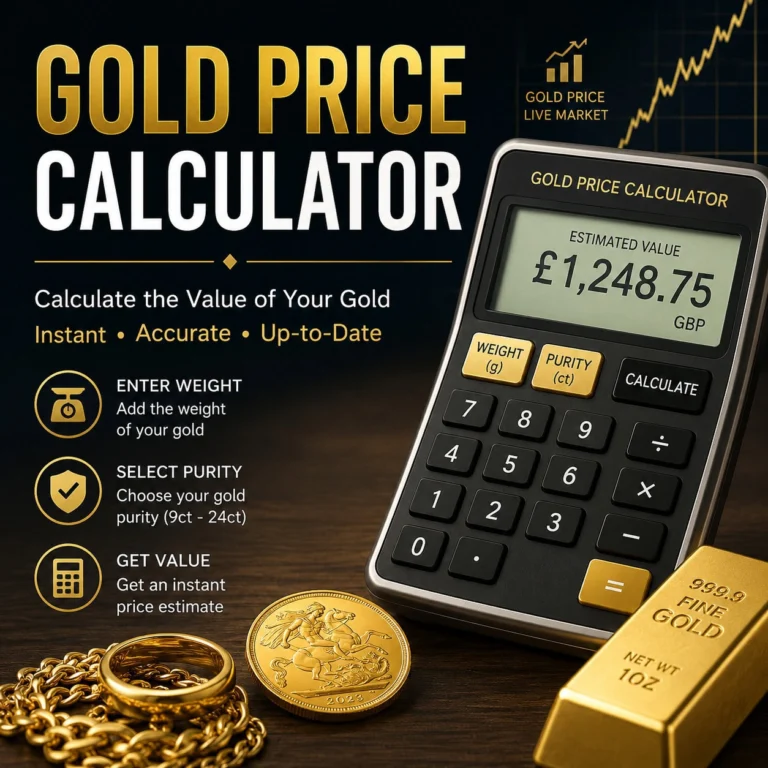
The illustration shows an example amount, not a current estimate. Use the working calculator above for your own weight and purity.