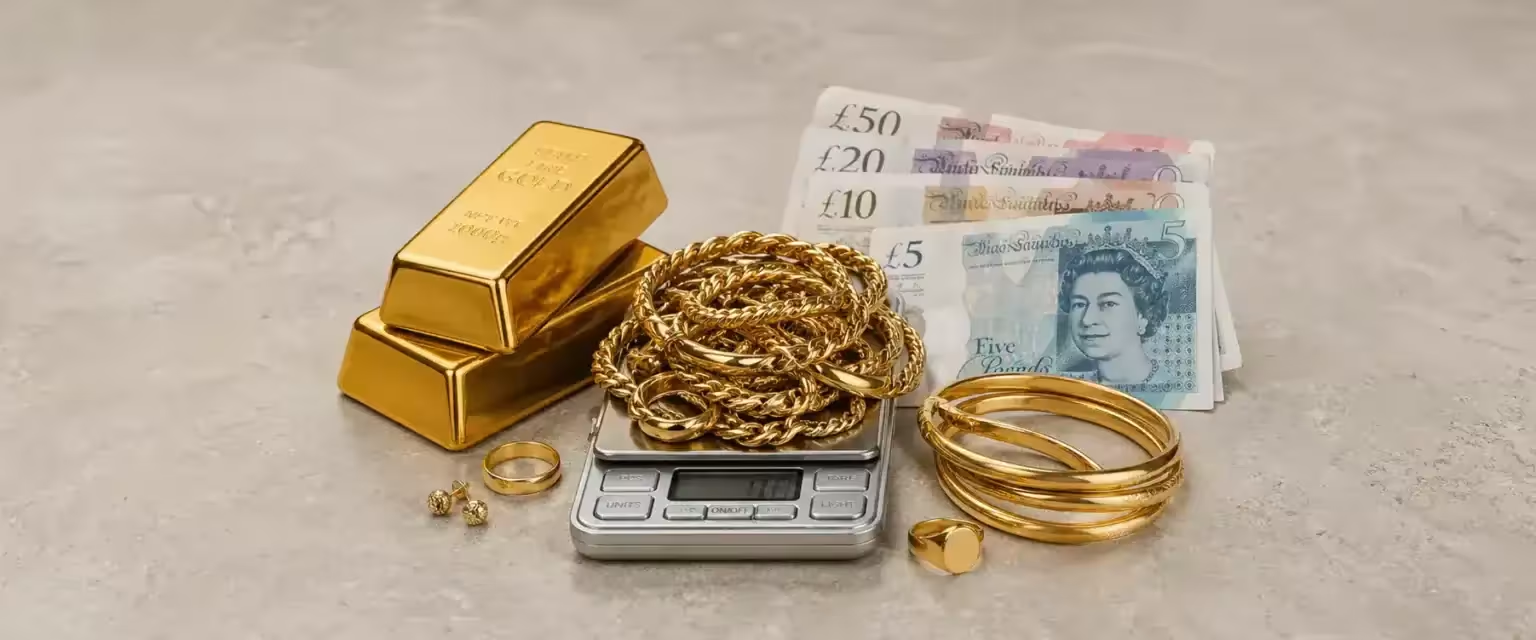


Gold Testing Services in the UK
Our gold testing services help you understand the metal content of jewellery and other gold items. Moonstone Gold offers XRF analysis with an elemental report, so you can review the findings before deciding what to do next. Choose a testing package below or contact us to discuss your items.
Understand Your Gold’s Composition
A stamp, colour or old receipt can provide clues about a piece. However, these details do not always establish its actual composition. Testing adds useful evidence, especially when a hallmark looks unclear or an item’s history is unknown.
For example, you may want to check an inherited ring, a broken chain or a group of mixed jewellery. First, tell us what you have and why you need the analysis. Then, we can discuss whether our service suits your items and the question you want to answer.
Our paid testing packages include XRF elemental analysis. If you simply want to sell unwanted gold, visit our postal selling service to learn about that separate process.
Gold Testing Services and Prices
Compare the packages by consignment weight and delivery insurance below. Each option includes an XRF elemental report. In addition, a separate return fee applies, so check both figures when choosing a package.
Basic
£50
Plus £7.75 return fee per consignment.
- Up to 10g of gold per consignment
- Delivery insured up to £750
- XRF elemental report
Premium
£80
Plus £17.75 return fee per consignment.
- Up to 50g of gold per consignment
- Delivery insured up to £2,500
- XRF elemental report
Ultimate
£95
Plus £35.50 return fee per consignment.
- Up to 100g of gold per consignment
- Delivery insured up to £5,000
- XRF elemental report
Before posting, confirm the appropriate package and delivery arrangements with us. Also, tell us if your items exceed a listed weight or insurance limit. A weight allowance does not mean that every item within that weight falls within the stated insurance value.
How XRF Gold Analysis Works
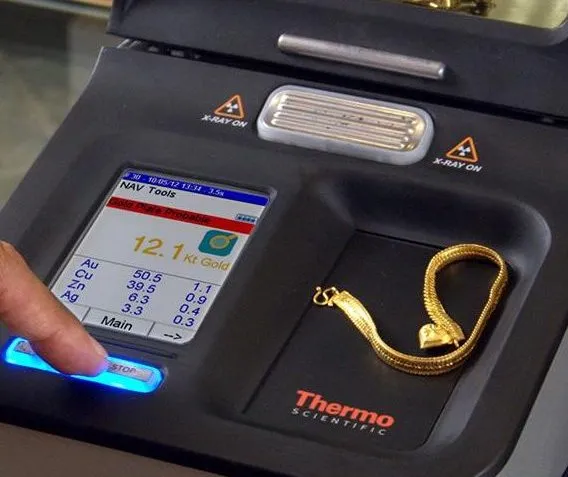
X-ray fluorescence, or XRF, uses X-rays to help identify elements in a sample. The instrument measures the sample’s response and reports its detected composition. As a result, an operator can assess the metals present at the tested area.
This method can examine gold alloys without an acid scratch test. However, the operator still needs to consider the item’s shape, surface and construction. Equipment settings and calibration also affect the result. For more detail, read Thermo Fisher Scientific’s explanation of XRF instruments.
Our gold testing services use this analysis to provide useful composition information. Nevertheless, a surface reading alone cannot prove that an entire object has the same composition throughout.
What Can Affect a Test Result?
Plating, solder and mixed components can affect how a reading represents an item. For instance, a clasp may differ from the chain it joins. Similarly, a surface coating may differ from the underlying metal.
Therefore, tell us about any repairs, plating or unusual construction that you know about. This information helps guide the assessment. The GIA’s research on gold-plated gold describes cases where plating influenced XRF results.
If you need evidence for a particular purpose, explain that before booking. For example, an insurance valuation, formal hallmark or full authenticity assessment may require a different service. An elemental report does not automatically fulfil those requirements.
Prepare for Our Gold Testing Services
First, make a simple list of the pieces you want us to test. Include any visible marks, approximate weights and relevant documents. Also, keep items with different known purities separate so that their details remain easy to follow.
Next, contact us to arrange the service and confirm packaging instructions. Avoid polishing away marks or taking jewellery apart just to prepare it for testing. Instead, explain any loose parts or damage when you enquire.
Finally, keep a record of the items you send and the agreed delivery details. Our gold testing services have specific package limits, so confirm the cover before dispatching valuable pieces. You can also ask how we will identify individual items in your report.
Reading Your Elemental Report
An elemental report describes the analysis findings for the tested sample or area. First, match those findings to the relevant item. Then, ask us to explain anything you do not understand, including differences between a visible stamp and the reading.
Gold purity describes the proportion of gold in an alloy. However, jewellery can also contain stones, enamel and other components. Consequently, a composition result does not mean that the full weight of a finished piece consists of that alloy.
Keep the report alongside your item records for future reference. Also, remember that metal composition and selling value answer different questions. A buyer still needs to consider eligible weight, current rates and the terms of their offer.
Gold Testing Services or a Selling Valuation?
Choose a paid test when you want composition information and a report. Alternatively, if your main aim is to sell gold, start with our selling service and discuss the assessment process with the team.
You can use our gold value calculator for an indicative estimate once you have suitable weight and purity information. However, an online estimate cannot test your item or confirm its payable weight.
If you accept a selling offer, we pay immediately by bank transfer. The paid testing packages above have their own fees and return charges. Therefore, confirm which service you want when contacting us.
Arrange Gold Testing Services
To discuss our gold testing services, contact the Moonstone Gold team with your item details and approximate consignment weight. We can help you choose a package and clarify the next steps before you send anything.