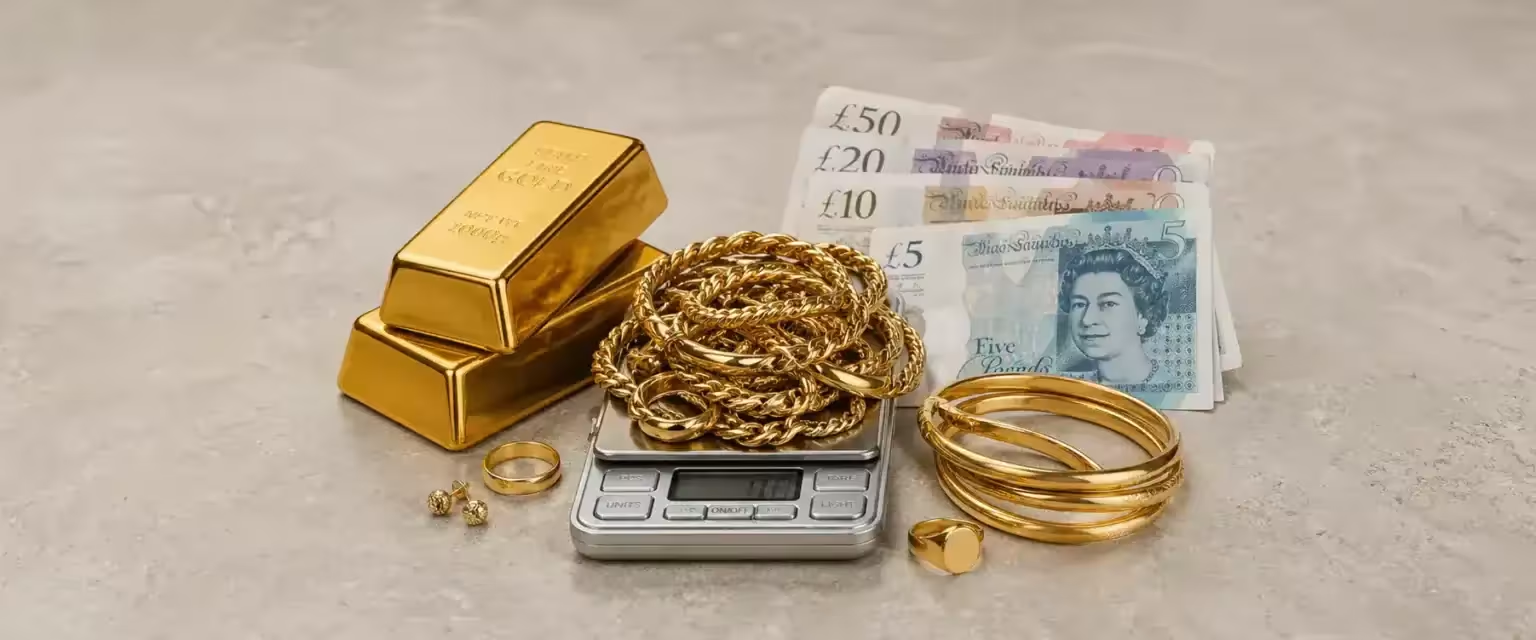


Gold Fineness Testing - Understanding Gold Purity
Gold fineness testing helps establish the proportion of gold in an alloy. Different methods answer different questions, from checking surface composition to analysing a laboratory sample. This guide compares XRF, fire assay, acid tests, electronic testers and ultrasound so you can understand what a result means.
What Does Fineness Mean?
Fineness expresses precious-metal content in parts per thousand. For example, a fineness of 750 means 750 parts gold in every thousand parts of alloy, equivalent to 75% gold. Jewellery makers also describe purity in carats, with 18ct corresponding to this proportion.
However, purity and total item weight are separate measurements. A ring may contain gemstones, while a necklace can have fittings made from a different material. Therefore, the weight of the whole item does not necessarily equal the weight of its gold alloy.
First, record any visible marks and details you already know. Then, ask a professional to assess unclear or conflicting information. Gold fineness testing provides evidence that appearance alone cannot supply.
Gold Fineness Testing With XRF
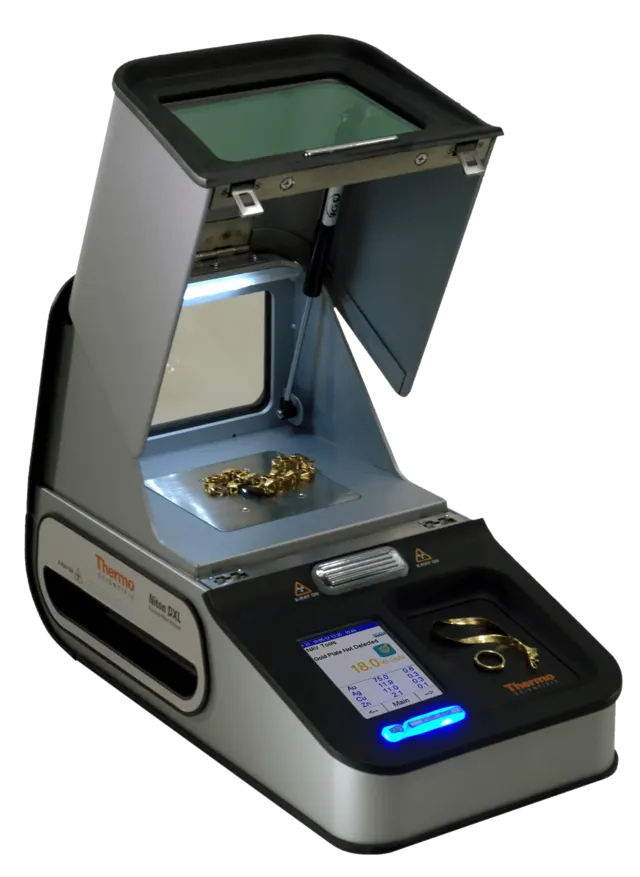
X-ray fluorescence, usually called XRF, helps identify elements in the area under examination. The instrument uses X-rays and measures the sample’s response. As a result, a trained operator can assess the composition at the tested surface.
XRF can examine suitable items without removing a sample for fire assay. However, the operator must consider the surface, shape and construction of the piece. Sheffield Assay Office explains its use of the technique in this guide to modern jewellery testing.
Also, a surface result does not prove uniform composition throughout an entire object. Plating, solder and mixed components can affect the interpretation. Therefore, the assessor may need to examine several areas or recommend another method.
Why the Tested Area Matters
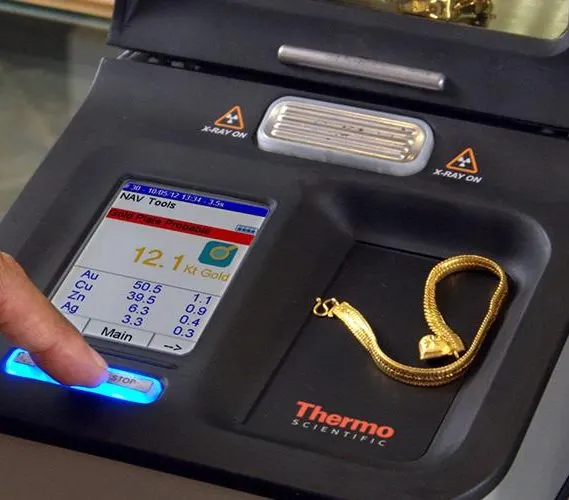
A reading from one part of a piece may differ from a reading elsewhere. For example, a clasp or repaired joint may contain a different alloy from the main chain. Consequently, the assessor needs to relate each reading to the part they examined.
Before gold fineness testing, mention any plating, repairs or unusual construction you know about. Also, explain whether you need a general composition check or evidence for a particular purpose. This helps the team select an appropriate approach.
Keep any report with your item records. If a result differs from a stamp or previous description, ask the assessor to explain the difference before drawing a conclusion.
Fire Assay and Laboratory Gold Analysis
Fire assay analyses a sample through a laboratory process that separates gold from other materials. Unlike a surface reading, it consumes the sample used in the test. Therefore, sampling and permission matter when the original piece has sentimental or collectable value.
The sample also needs to represent the material you want to assess. Otherwise, even a precise analysis may not answer the question about the whole item. Ask the laboratory how it selects and prepares the sample.
Sheffield Assay Office describes fire assay as a reference method in its explanation of cupellation. This comparison does not mean that Moonstone Gold offers every laboratory method listed here.
Acid Tests and Electronic Testers
An acid test compares a metal’s reaction with known testing conditions. It commonly involves a streak on a touchstone, although some procedures involve marking the item itself. Consequently, ask about possible marks before agreeing to the process.
Electronic gold testers use different measuring principles depending on the device. Their suitability varies with the alloy, surface and operating procedure. Therefore, avoid treating every tester as equally precise or assuming one reading confirms authenticity.
For a technical comparison, see the GIA study of gold-content testing methods. A professional should explain both the method and the limits of the result.
What Can Ultrasound Check?
Ultrasonic testing examines how sound travels through an object. With suitable equipment and interpretation, it can help reveal internal inconsistencies in bullion bars. However, it does not provide a direct elemental breakdown or a gold percentage.
As a result, ultrasound and surface analysis can answer complementary questions. Equipment manufacturer Evident explains this approach in its guide to testing the interior of gold bars. The item’s shape and dimensions also affect which checks are practical.
Choosing a Gold Fineness Testing Method
Start with the question you need to answer. For instance, checking an unmarked ring differs from investigating the interior of a large bar. Then, consider whether the item must remain intact and whether you need a written report.
Before arranging an assessment, ask:
- Which parts of my item will you test?
- Could the procedure leave a mark or require a sample?
- What will the report establish?
- What are the testing and return charges?
- Would another method be necessary if the results are unclear?
Also, explain any formal requirements before booking. A composition report does not automatically serve as a hallmark, insurance valuation or complete authenticity certificate. Confirm that the proposed service meets your needs.
Arrange an Assessment With Moonstone Gold
For XRF analysis and an elemental report, explore our testing packages and prices. First, compare the consignment limits and return fees. Then, contact us to confirm the arrangements for your items.
Alternatively, if you want to sell unwanted jewellery, use our postal gold selling service. The team assesses your items before making an offer, and we pay immediately by bank transfer after acceptance.
If you are unsure which route suits you, contact our team. Explain what you have and what you want to learn from gold fineness testing so we can discuss the next step.