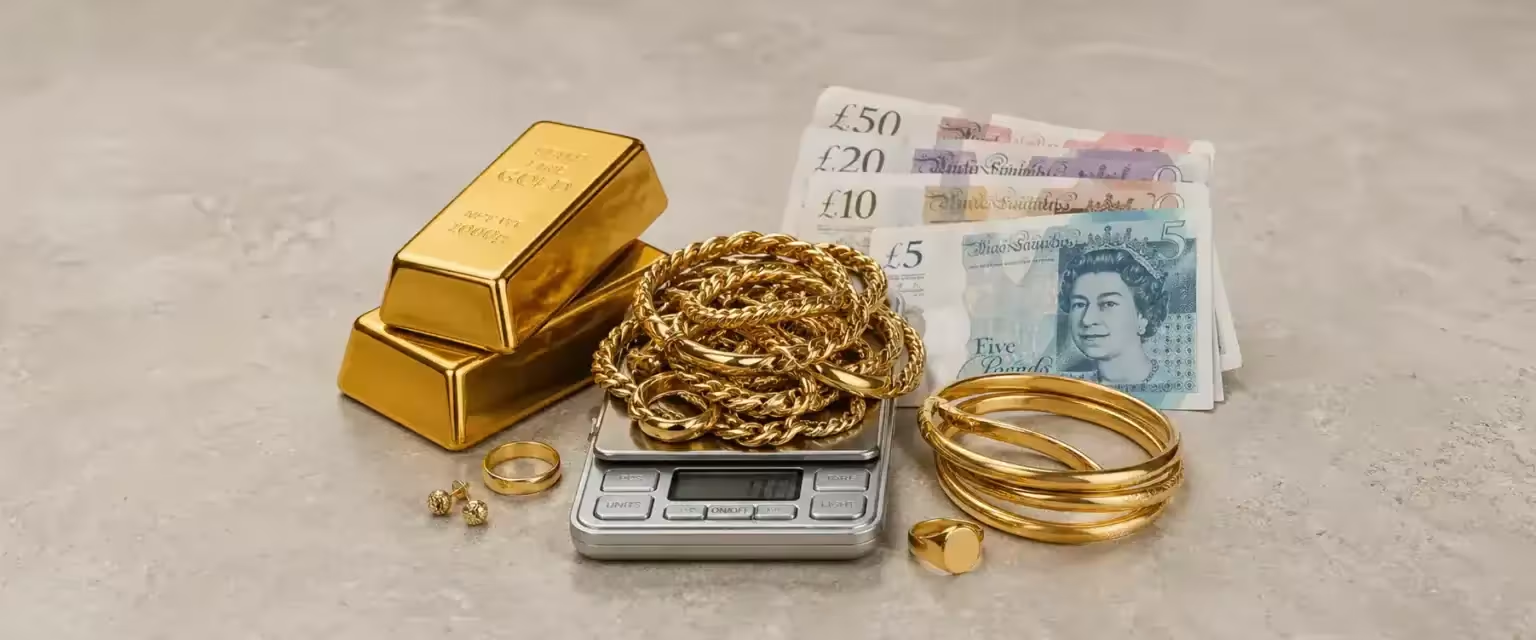



Gold jewellery tax rules in the UK do not make every sale taxable. Whether you owe Capital Gains Tax (CGT) depends on the personal possessions exemption, any gain you make and your overall taxable gains for the year.
This guide explains the main rules for UK-resident individuals selling personal jewellery. It provides general information, not personal tax advice.
Updated 9 October 2026. Rates and allowances below refer to the 2026/27 tax year.
Gold jewellery tax: when does CGT apply?
Capital Gains Tax concerns the gain you make when you sell an asset, rather than the full amount you receive. Jewellery falls within the rules for personal possessions, sometimes called “chattels”.
However, an increase in value does not always create a tax bill. First, check the personal possessions exemption. Then, if the sale is not exempt, calculate the gain and consider your annual allowance. See GOV.UK’s guidance on personal possessions.
The £6,000 rule for personal jewellery
For an ordinary sale of a single item of personal jewellery, disposal proceeds of £6,000 or less generally mean that any gain is exempt from CGT. This threshold concerns the sale proceeds, not the profit. HMRC confirms the exemption in its guidance on jewellery and other personal possessions.
If you sell an item for more than £6,000, you need to check the gain. However, exceeding the threshold does not automatically mean you owe tax.
What if you sell several pieces?
The £6,000 limit normally applies to each separate possession. However, special rules apply to sets: items that complement each other and are worth more together than separately.
If you owned the parts at the same time and sell them to the same buyer, connected buyers or people acting together, the limit can apply to the set collectively. Therefore, do not assume that splitting a matching jewellery set into separate sales creates separate exemptions. See HMRC’s rules for sets of personal possessions.
Working out your gain for gold jewellery tax
Your gain is usually the sale price minus what you paid for the jewellery. You can also deduct certain qualifying costs of buying, selling or improving the item. Ordinary repair costs do not qualify as improvement costs.
For example, jewellery bought for £7,000 and sold for £8,000 has a gain of £1,000 before allowable costs. The £8,000 payment is not itself the taxable gain.
For sales above £6,000 and up to £15,000, a special calculation may reduce the chargeable gain. You compare the actual gain with five-thirds of the amount by which the sale proceeds exceed £6,000, and use the lower figure. GOV.UK explains how to calculate gains and apply this limit.
Inherited jewellery and gifts
If you inherited jewellery, the starting value is generally its value at the previous owner’s death, rather than what that person originally paid. Use the relevant Inheritance Tax value where available.
For gifts, market value at the date of the gift may apply, although transfers between spouses or civil partners have different rules. Check GOV.UK’s market value guidance before calculating a gain on inherited or gifted jewellery.
How the annual allowance affects gold jewellery tax
For 2026/27, the standard CGT annual exempt amount for an individual is £3,000. This covers your overall gains for the tax year, not a separate £3,000 allowance for each sale. See the current CGT allowances.
To check whether tax is due, add together your chargeable gains from relevant asset sales and deduct allowable losses. Other gains may already have used some or all of your allowance. The tax year runs from 6 April to 5 April the following year. GOV.UK explains how to work out whether you need to pay.
The £6,000 personal possessions exemption and the £3,000 annual allowance are different rules. The first concerns the proceeds from an item or qualifying set; the second concerns your overall gains for the year.
Gold jewellery tax rates for 2026/27
For 2026/27, taxable gains on personal jewellery generally fall within the main CGT rates of 18% and 24%.
The rate depends on your taxable income and the size of your taxable gains. Gains falling within the unused basic-rate band attract 18%, while amounts above that band attract 24%. Higher and additional-rate taxpayers generally pay 24%. These rates apply to the taxable gain after relevant deductions and allowances, not the entire sale price. Check the current GOV.UK rate guidance.
What happened at the October 2024 Budget?
An earlier version of this article encouraged readers to consider selling before the 30 October 2024 Budget. That date has passed, and the article no longer recommends selling to meet that deadline.
The Budget increased the main CGT rates from 10% and 20% to 18% and 24% for disposals on or after 30 October 2024. You can read the announcement in the official Autumn Budget 2024 document. Any decision today should use the rules that apply to your sale.
Gold jewellery tax records and reporting
Keep purchase receipts, relevant valuations, sale confirmations and evidence of allowable costs. These help establish the gain and support any tax return. See HMRC’s record-keeping guidance.
If your taxable gains exceed your available allowance, you normally need to report and pay CGT. Reporting can also be necessary when no tax is due. For example, if you are registered for Self Assessment, GOV.UK says you must report gains where total asset disposal proceeds exceed £50,000, even if your gains are below the allowance. Check the reporting conditions for your circumstances.
Follow the official reporting and payment guidance for the appropriate method and deadlines. If ownership, valuations or your wider tax position are unclear, ask a qualified tax adviser before relying on an estimate.
Considering selling your gold jewellery?
Take time to understand the offer and any tax implications before deciding whether to sell. A buyer’s valuation helps you assess the proposed payment, but it does not establish your personal tax liability.
Once you understand the gold jewellery tax rules, explore Moonstone Gold’s gold jewellery selling service, or visit our sell gold for cash page for information about the selling process.