

Is selling gold taxable UK? Sometimes, but tax does not apply to every sale. The answer depends on what you sell, whether you make a gain and whether HMRC treats your activity as investment disposal or trading. Different rules may also apply to jewellery, scrap, bullion and legal-tender coins.
This guide explains Capital Gains Tax and VAT in general terms for the 2026–27 tax year. However, tax depends on individual circumstances. Therefore, seek advice from HMRC or a qualified tax adviser if you are unsure.
Is Selling Gold Taxable UK?
For a private individual, selling an item is not automatically taxable. Capital Gains Tax normally concerns the gain rather than the total amount received. In simple terms, a gain is usually the sale proceeds minus the allowable acquisition and disposal costs.
However, frequent buying and selling with the intention of making a profit may amount to trading. In that case, Income Tax and business rules may apply instead of, or alongside, Capital Gains Tax.
Before considering tax, you can check an estimated value using the Moonstone Gold gold price per gram page.
When Selling Gold May Trigger CGT
A disposal may create a chargeable gain when you sell gold for more than its allowable cost. For example, this could apply to investment bars, non-exempt coins or high-value jewellery that has increased in value.
In addition, HMRC looks at your total taxable gains across all chargeable assets during the tax year. Losses and available reliefs may affect the calculation. Consequently, the profit on one gold sale should not always be considered in isolation.
Capital Gains Tax on Gold UK
The rules for capital gains tax on gold UK sellers may encounter include the annual exempt amount. For 2026–27, HMRC lists an annual exempt amount of £3,000 for most individuals. You normally pay CGT only when your total taxable gains exceed the available allowance.
For gains made from 6 April 2026, the main individual CGT rates are generally 18% and 24%. The applicable rate depends on taxable income and the amount of taxable gain. Check the official HMRC Capital Gains Tax rates before calculating a liability.
Importantly, the allowance applies to total chargeable gains, not separately to every item. Therefore, include relevant gains from other chargeable assets when reviewing your position.
CGT-Free UK Legal-Tender Coins
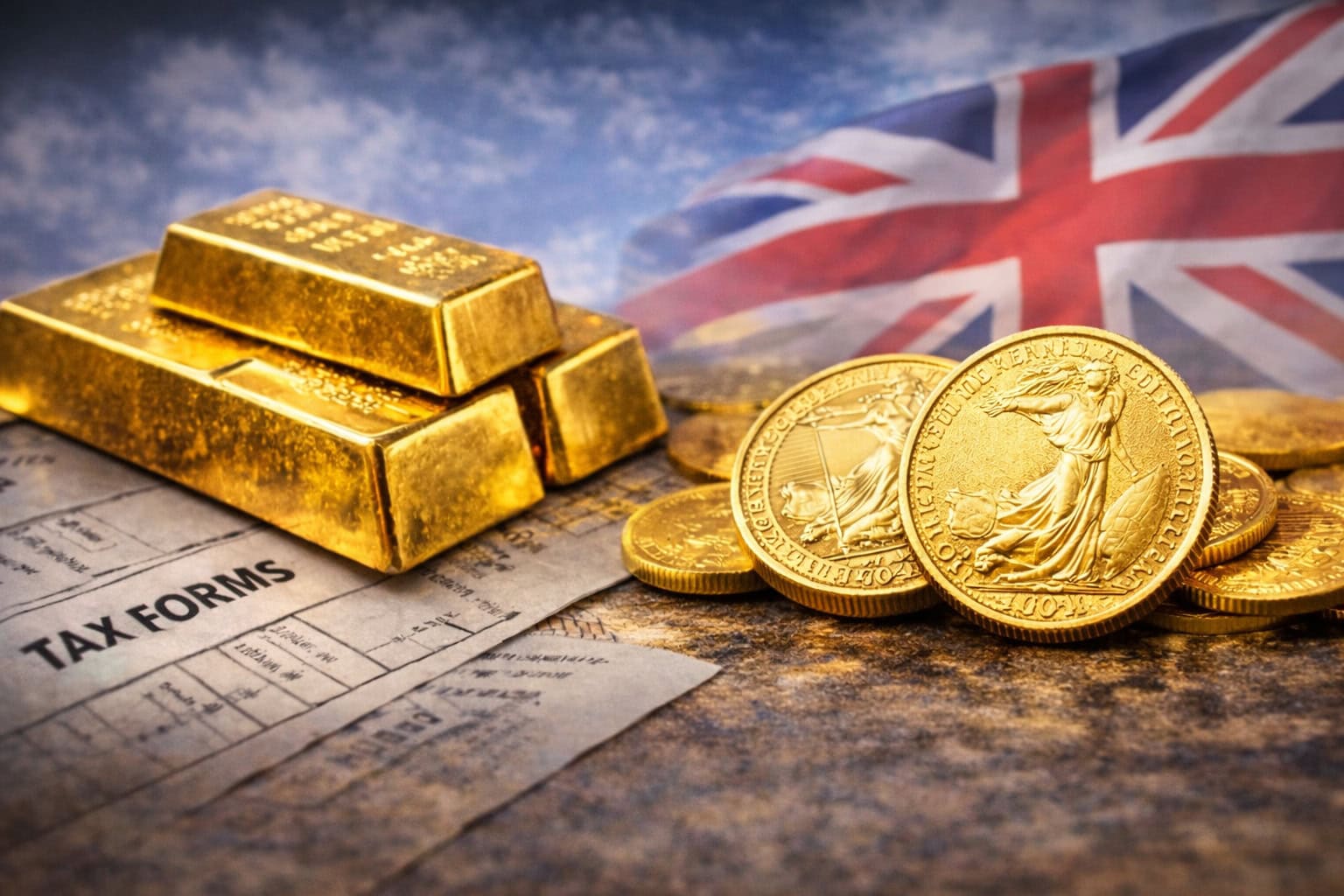
Some UK gold coins receive different CGT treatment because they are sterling currency. HMRC states that Sovereigns minted in 1837 or later and Britannia gold coins are exempt from CGT.
However, not every gold coin qualifies. A foreign bullion coin can remain a chargeable asset even if it is legal tender in another country. Similarly, pre-1837 Sovereigns are not covered by the same sterling-currency exemption.
Read the official HMRC guidance on currency and gold coins. You can also request a valuation through the Moonstone Gold gold coin selling service.
Selling Gold Coins Tax UK: Which Coins Are Exempt?
The phrase selling gold coins tax UK covers two separate questions. First, determine whether the coin is exempt sterling currency. Next, if it is not exempt, establish whether its disposal produces a taxable gain.
Non-exempt coins may also fall under the rules for personal possessions, known as chattels. Moreover, special rules can apply when several coins form a set. Therefore, do not assume that selling each coin separately creates a separate exemption.
Jewellery, Scrap Gold and Chattels
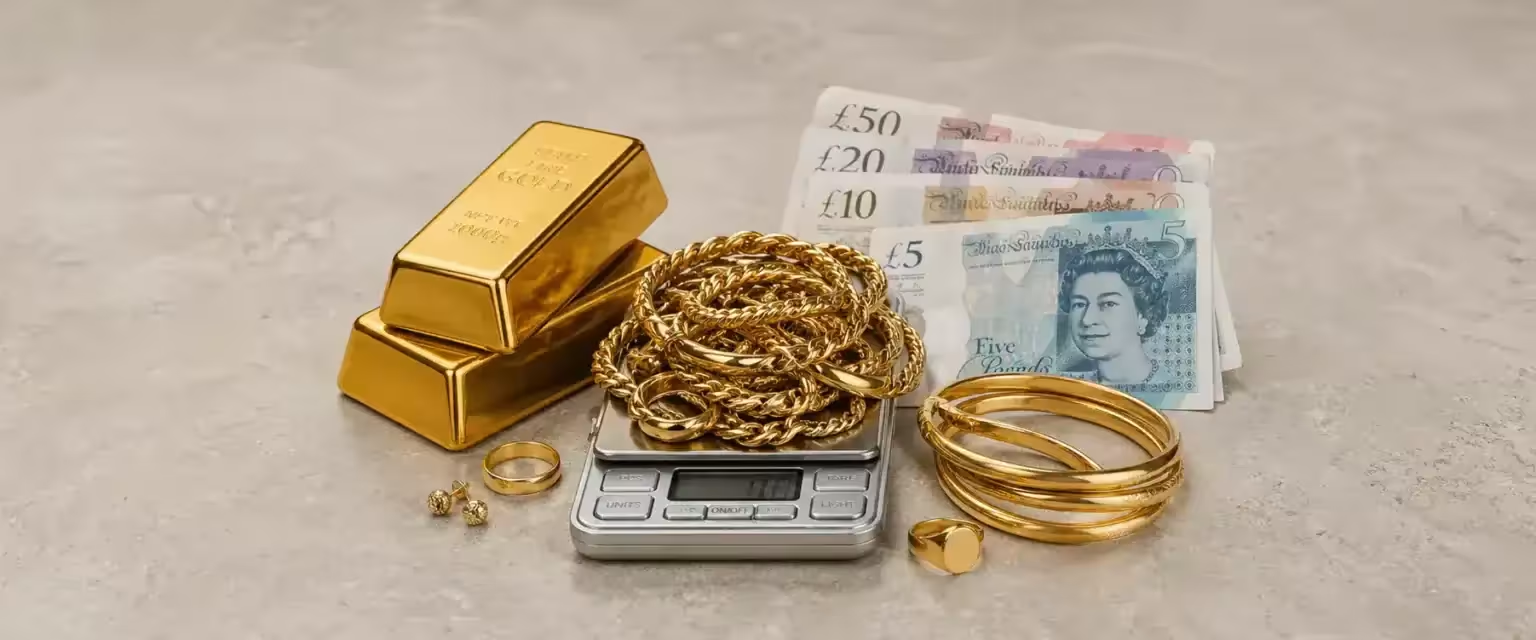
For anyone asking “is selling gold taxable UK?”, jewellery and scrap require particular attention because the chattels rules may apply.
Jewellery and many personal gold items are tangible movable possessions, or chattels. HMRC says you may have to pay CGT when you sell a personal possession for £6,000 or more and make a gain.
A disposal of a single chattel is generally exempt when the gross proceeds do not exceed £6,000. If proceeds are between £6,000 and £15,000, special rules may restrict the chargeable gain. Matching or complementary items may also count as a set.
For further details, consult HMRC’s personal possessions and CGT guidance. If you are selling ordinary unwanted jewellery for less than its original cost, there may be no gain. Nevertheless, keep evidence of the purchase and sale where possible.
Do You Pay Tax When Selling Gold UK?
If you ask, “do you pay tax when selling gold UK?”, start by identifying the type of gold and how you acquired it. Then compare the sale proceeds with the allowable acquisition value and costs.
Gold received as a gift or inheritance may require a market value rather than the amount originally paid by the previous owner. For inherited assets, the relevant starting value is commonly the market value at the date of death. However, estate circumstances can affect the records available.
By contrast, people who regularly buy gold to resell at a profit may be trading. Consequently, they should review Income Tax, National Insurance and business-record requirements rather than relying only on CGT guidance.
VAT on Investment Gold
VAT is separate from Capital Gains Tax. HMRC generally exempts qualifying investment gold from VAT. This category can include qualifying bars, wafers and gold coins that meet the statutory conditions.
For example, qualifying bars or wafers must generally have a purity of at least 995 thousandths. Gold coins must satisfy separate criteria covering age, purity, legal-tender status and market premium.
Private individuals selling their own possessions do not normally charge VAT merely because they sell an item. However, businesses and people trading in gold may have additional VAT obligations. Review HMRC’s VAT Notice 701/21 for the detailed investment-gold rules.
Do I Need to Declare Selling Gold UK?
The question “do I need to declare selling gold UK?” depends on your gains, total proceeds and tax-registration position. You generally need to report and pay CGT when total taxable gains exceed your available annual exempt amount.
In addition, people registered for Self Assessment must report gains when the total amount received from relevant asset disposals exceeds £50,000, even if gains remain below the allowance. Different rules apply to losses and some other circumstances.
Use HMRC’s guidance to check whether you need to report and pay CGT. If your position involves frequent trading, inherited assets, sets of coins or large values, seek professional advice.
Records to Keep After Selling Gold
Good records make it easier to calculate a gain and answer HMRC questions. Therefore, retain:
- Purchase receipts or other evidence of acquisition value
- Probate or valuation records for inherited gold
- Descriptions and photographs of the items
- Hallmark, purity and weight information
- Valuation documents and buyer correspondence
- Sale confirmations and payment records
- Evidence of allowable valuation or selling costs
If original records are missing, a tax adviser can explain whether another valuation method is appropriate.
Check Your Gold Before Selling
Ultimately, the answer to “is selling gold taxable UK?” depends on the asset, gain and nature of your activity. CGT-exempt legal-tender coins receive different treatment from jewellery, scrap, bars and non-sterling coins.
Before selling, estimate the item’s value and collect any available purchase records. You can then review the offer and consider whether tax reporting may apply.
To continue, visit the Moonstone Gold sell gold for cash page. Alternatively, read the guide explaining how the gold-selling process works.
This article provides general information only and does not constitute tax, legal or financial advice. Tax rules can change, and individual circumstances differ.
Inheritance itself is separate from CGT. Tax depends on what happens when you sell and whether there’s a gain.
If you’ve inherited valuable items, it’s worth getting professional advice.
HMRC states Sovereigns minted from 1837 onwards and Britannias are treated as sterling currency and exempt from CGT.
See: HMRC CG78305
VAT treatment depends on whether the product is classed as “investment gold” and the nature of the transaction. HMRC defines the criteria here: VAT Notice 701/21A