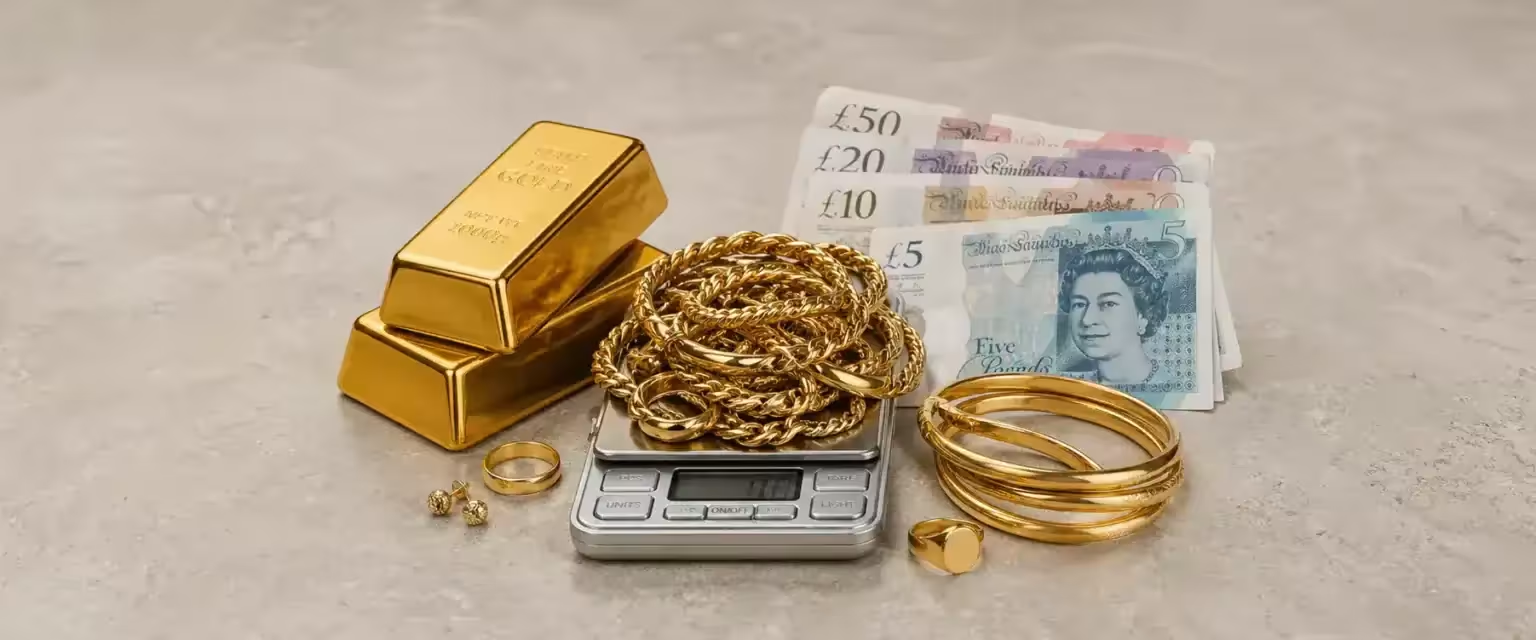


Does gold tarnish? Gold jewellery can develop discolouration, although pure gold is highly resistant to tarnishing. In many pieces, other metals mixed with the gold react at the surface. However, dirt, worn plating and residues can also change the appearance, so a dark patch does not prove an item is fake.
If you have found an old ring or chain that looks dull, first establish what it is made from. Then decide whether it needs gentle care or a professional assessment. You do not need to make jewellery look new before asking about its gold value.
Why does gold tarnish or change colour?
Most gold jewellery is an alloy, which means a mixture of gold and other metals. These added metals help create different colours and working properties. For example, copper helps produce the warm colour of rose gold.
The World Gold Council’s guide to gold jewellery explains how colour and purity relate to the alloy. Therefore, two pieces that both look yellow can contain different amounts of gold and other metals.
Tarnish is a surface reaction rather than simply a loss of shine. Metals such as silver and copper within an alloy can react with substances in their surroundings. Research published through NIST on gold, silver and copper alloys describes the formation of silver and copper sulphides during tarnishing tests.
However, not every dull finish is tarnish. Soap, skin oils and cosmetics can leave a film, while fine scratches can scatter light. Consequently, appearance alone cannot identify the cause or measure the gold content.
Does 9ct gold tarnish more easily than 18ct?
It can, because 9ct gold contains a larger proportion of other metals. A 9ct alloy contains 37.5% gold, whereas 18ct contains 75%. However, the exact alloy and the conditions around it also matter.
For that reason, carat is a useful clue rather than a timetable for colour changes. A well-kept 9ct ring may remain bright, while a higher-carat piece can still collect residue or show surface marks.
Higher purity generally improves resistance to tarnishing, but it does not make jewellery immune to all discolouration. A study in GIA’s Gems & Gemology journal linked spots on some high-purity gold pieces to silver contamination on their surfaces.
If you can see a small stamp, use our gold hallmark guide to understand it. A mark can help you identify the stated fineness, but uncertain items still need assessment.
Does gold tarnish if it is white, rose or plated?
White gold and a warmer colour underneath
White gold often has a rhodium coating that gives it a bright white finish. Over time, wear can reveal the warmer shade of the alloy beneath. This colour change is different from a tarnish layer.
As GIA explains in its white gold guide, rhodium plating affects both appearance and maintenance. If you want to keep wearing the piece, a jeweller can check whether the coating needs attention.
Rose gold and surface changes
Rose gold gets its pink tone from its alloy composition, including copper. Therefore, a subtle change in the surface does not automatically mean the item has lost its gold content. Equally, colour is not a reliable way to confirm its carat.
Gold plating and exposed base metal
A gold-plated item has a surface layer of gold over another material. If that layer wears through, the exposed metal may look different or develop tarnish. In contrast, solid gold jewellery contains gold alloy throughout the metal body.
Do not enter a plated item’s whole weight into a calculator as solid gold. Instead, check our guide to the gold items we accept before preparing a selling pack.
What to do about tarnished gold
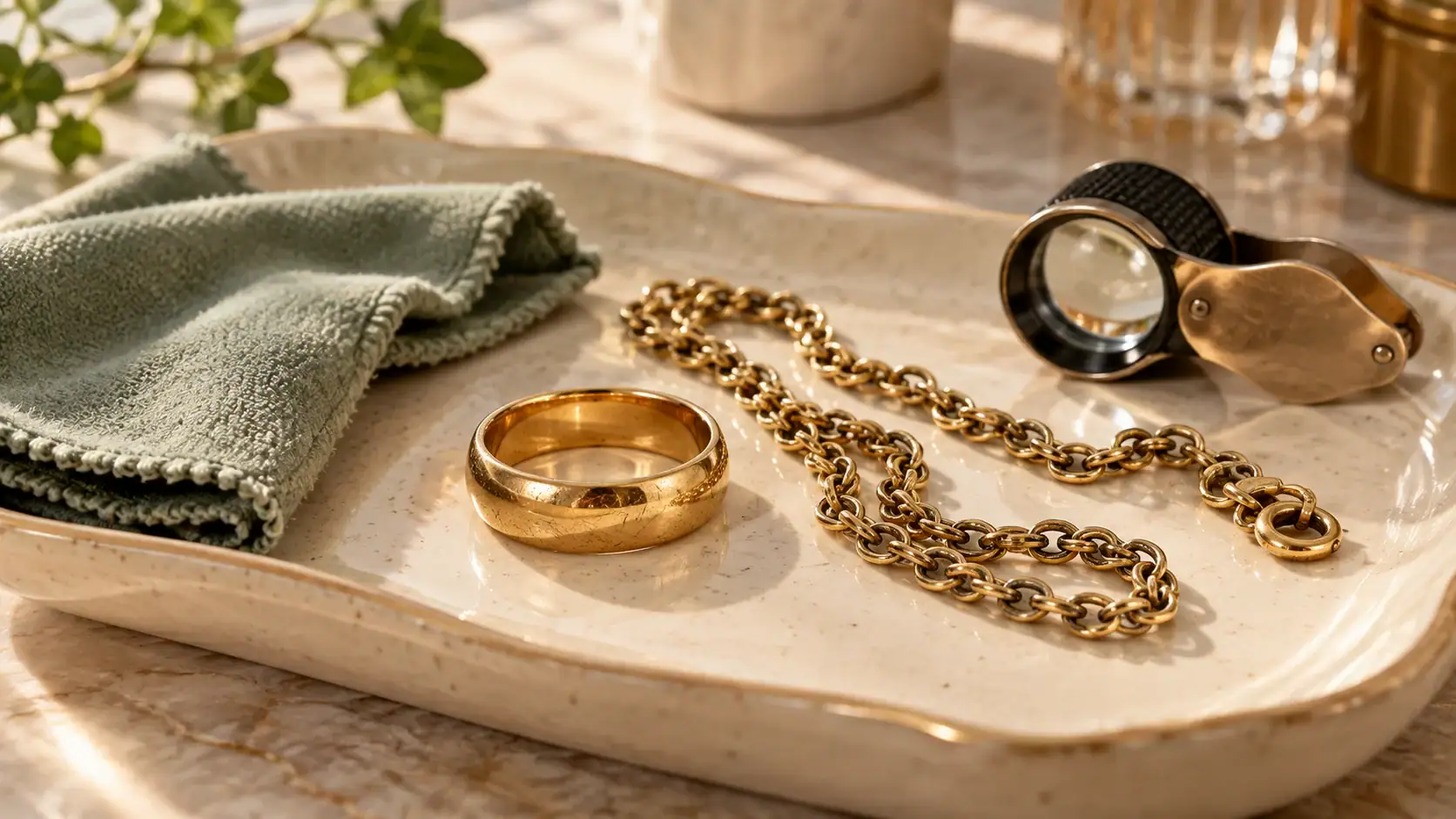
First, inspect the item in good light without scraping the surface. Note whether the change covers the whole piece or only a worn edge. Also check for loose stones, delicate settings and any maker’s care instructions.
For a plain gold item without stones or special finishes, a soft, lint-free cloth is a gentle starting point. If you are unsure about the materials, stop and ask a jeweller before using a cleaning product.
Avoid bleach, toothpaste and harsh household cleaners. GIA’s jewellery care advice warns that chlorine can damage gold alloys and that some gems need special handling. Likewise, ultrasonic cleaning is not suitable for every piece.
Do not use home acid tests or file through a coating to investigate a dark patch. Such methods can damage an item you may want to wear or sell. Instead, seek an assessment if the metal or finish remains uncertain.
How to reduce gold tarnishing and everyday wear
- Remove jewellery before using cleaning chemicals. Also take it off before swimming in chlorinated pools.
- Put jewellery on after applying cosmetics. This helps limit contact with sprays and lotions.
- Store pieces separately. A soft pouch or divided jewellery box helps prevent scratches.
- Keep items dry before storage. Follow any specific care advice for stones, strings or special finishes.
These habits help with care, but they cannot guarantee that every alloy will remain unchanged. If a piece repeatedly develops marks, ask a jeweller to examine it rather than applying stronger cleaners.
Can you sell tarnished gold?
Yes, genuine gold can still have value when its surface looks dull or tarnished. For a gold-content assessment, the key details are the eligible metal weight and its confirmed purity. A change in appearance does not by itself remove the gold inside.
However, condition can matter when selling a piece as complete jewellery. A designer item, antique or ring with valuable stones may need a specialist valuation. Therefore, seek advice before polishing or altering something that could have value beyond its metal.
Before requesting an offer, make a simple record of each item. Photograph the piece and any visible marks, then note stones or mixed materials. If you have suitable scales, record the weight in grams, but leave fixed parts intact.
For an uncertain item, see our gold testing services. If you already know its weight and carat, our gold price calculator can provide an indicative estimate.
Does gold tarnish – the questions to ask before selling
Focus on three questions. Is the piece solid gold alloy or plated? What is its assessed purity? Does it have value as jewellery beyond its gold content?
Those answers are more useful than judging whether the surface looks bright. Keep uncertain pieces as they are and ask how the buyer will assess them. When you are ready, order your free gold selling pack. Your final offer depends on the assessed weight and purity of your items.