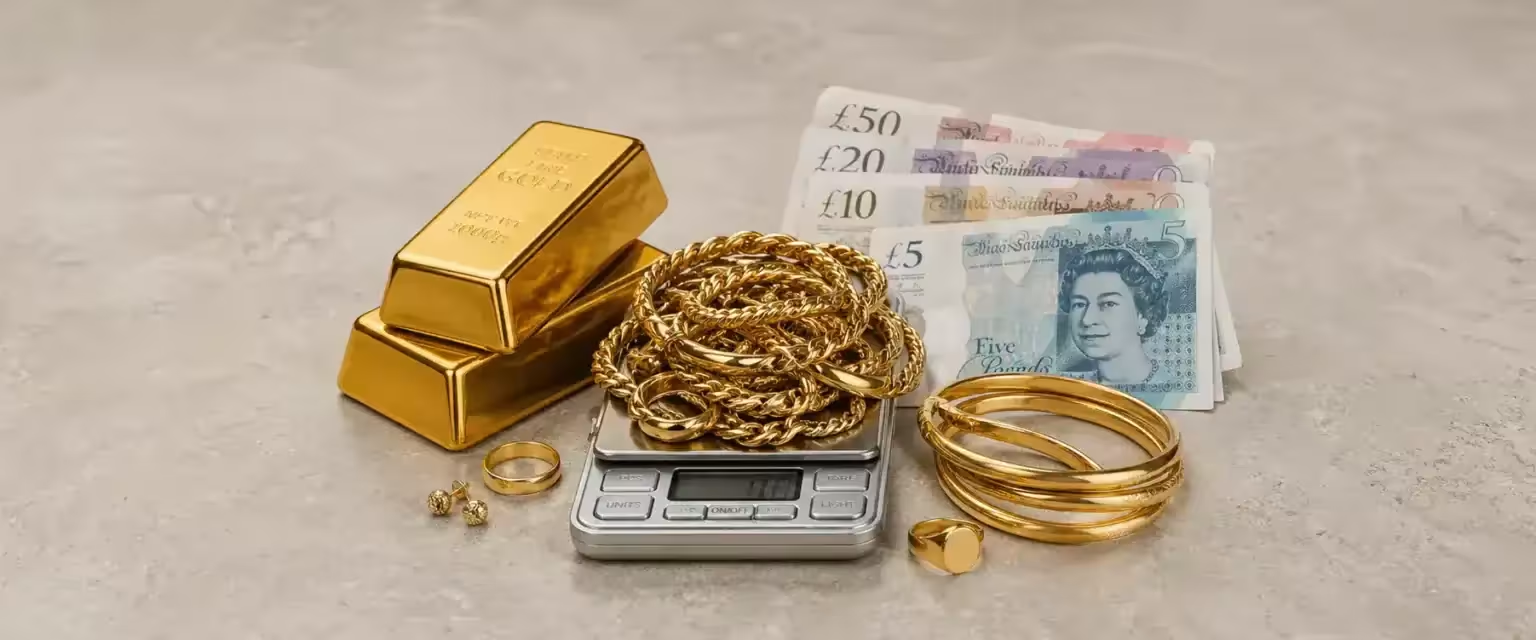


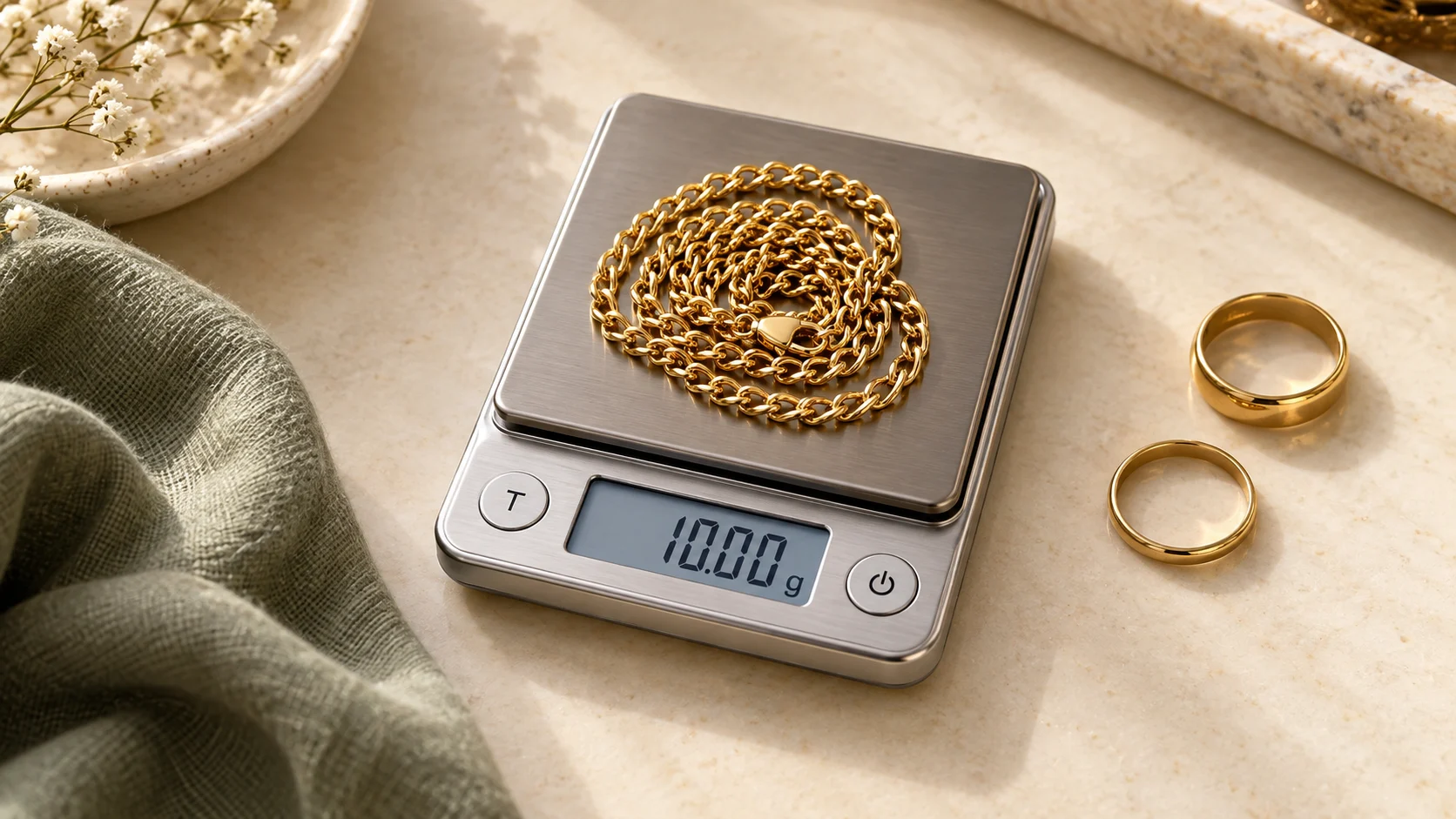
Learning how to weigh gold at home helps you prepare for a valuation. Use suitable digital jewellery scales, select grams, and weigh each item separately. However, remember that the reading includes stones and other materials, so it may differ from the gold weight a buyer accepts.
This guide explains the practical steps, common scale errors and what to record before selling. Once you have a weight and know the carat, you can use our gold price calculator for an indicative estimate.
What you need to weigh gold at home
First, gather your jewellery, a small tray and a notebook. Choose a firm, level table away from draughts and vibration. Then check that your scales have enough battery power and a clean weighing platform.
Digital jewellery scales that display 0.01g increments can help with small items. However, the number of decimal places is not a guarantee of accuracy. Check the maker’s stated accuracy, minimum load and maximum capacity before relying on a reading.
A kitchen scale that rounds to whole grams gives only a rough guide for light jewellery. For example, a one-gram difference is substantial for a ring weighing only a few grams. If suitable scales are unavailable, leave the weighing to a buyer or jeweller.
For reference, Adam Equipment’s jewellery scales guide shows the different capacities and reading increments available. You do not need to buy professional equipment simply to request a valuation.
How to weigh gold at home – six simple steps
1. Sort your gold before weighing at home
First, separate rings, chains, earrings and pendants. Keep items with different known carats apart. For example, record a 9ct chain separately from an 18ct pendant, even if you normally wear them together.
If a mark is unclear, write “unknown” beside the item instead of guessing. Our guide to gold hallmarks explains common marks. Weight alone cannot tell you whether an item is gold or establish its purity.
2. Set the scales to grams
Next, select the unit marked “g”. Check this every time, because some scales remember the last unit used. Avoid copying a reading in ounces, grains or gemstone carats into a calculator that expects grams.
Also follow the scale maker’s setup instructions. If calibration is required, use the specified calibration weight. A household object with an assumed weight is not a reliable substitute.
3. Zero the display and tare any tray
With the empty platform clear, check that the display reads zero. If you need a tray to hold small pieces, place it on the platform first. Then press the tare button so the display returns to zero before adding jewellery.
The tare function removes the tray’s weight from the displayed reading. However, the tray still counts towards the scale’s maximum physical load. Keep the combined load within the maker’s limit.
4. Place the whole item on the platform
Now place one item in the centre and wait for the reading to settle. Keep your hands clear. For chains, gently gather every link onto the platform or into the tared tray.
A chain hanging over the edge and touching the table can give a misleading result. Similarly, a tray touching a nearby object can affect the measurement. Make sure nothing supports the item outside the weighing surface.
5. Check your home gold weighing results
Lift the item off, check that the display returns to zero, and weigh it again. Repeat once more if needed. If the results vary, check the surface, battery, draughts and unit setting before recording a figure.
Do not average clearly unstable readings and treat the result as exact. Instead, note that the weight needs checking. A consistent home reading is useful preparation, but it does not replace a buyer’s assessment.
6. Record weight, carat and any stones
Finally, write down the reading in grams beside a short description. Add the visible mark and note any stones, beads or mixed materials. Take a photo of each item so you can match it to your notes later.
- Item: plain yellow gold ring.
- Home weight: 4.25g.
- Visible mark: 375, subject to confirmation.
- Other materials: no visible stones.
This example is a record format, not a valuation. For a pair of earrings, also note whether you weighed the backs with them. That detail can explain a later difference.
Why total jewellery weight is not always gold weight
Your scales measure everything on the platform. Therefore, the reading can include gemstones, pearls, enamel, clasp springs and other parts. These materials should not automatically receive the same price per gram as gold alloy.
Leave fixed stones and delicate fittings in place. Do not cut, file or dismantle jewellery just to obtain a home weight. Instead, ask the buyer how they assess non-gold parts and whether stones have any separate value.
There is also a difference between alloy weight and pure gold content. A plain 10g item made entirely from 9ct gold alloy contains 3.75g of pure gold. However, a calculator asking for the item’s weight and carat normally needs the 10g alloy weight. Do not reduce the weight for purity twice.
Common questions about weighing gold at home
Can I weigh gold without scales?
You cannot reliably work out a jewellery item’s weight from its length, appearance or a photograph. Hollow and solid designs can look similar but weigh very different amounts. Instead, arrange a weighing if you do not have suitable scales.
Can a phone app weigh jewellery?
An ordinary phone app cannot turn a phone into a calibrated jewellery scale. Apps that connect to separate weighing equipment are different, but still depend on that equipment. Therefore, avoid using an app-only estimate as the basis for an expected payment.
Is the carat setting on scales the same as 9ct gold?
No. A scale’s “ct” setting measures gemstone weight. According to GIA’s carat weight guidance, one metric carat equals 0.2g. In contrast, 9ct or 18ct describes gold purity. Select grams when weighing jewellery for our calculator.
Why might a buyer record a different weight?
Possible reasons include scale accuracy, rounding, different included parts or an allowance for stones. Ask for the assessed weight and purity for each group of items. Then compare those details with your notes, rather than comparing only the total offer.
Use your weight to prepare for a valuation
Knowing how to weigh gold at home gives you a clearer starting point. Keep your notes, leave uncertain items intact and flag any unknown carats. Then enter the relevant details into the calculator for an estimate in pounds sterling.
When you are ready, order your free gold selling pack. Your final offer depends on the assessed weight and purity of your items.